New York foreclosure laws and timelines homeowners should know
By Diego Bennett · Updated 2026-07-30
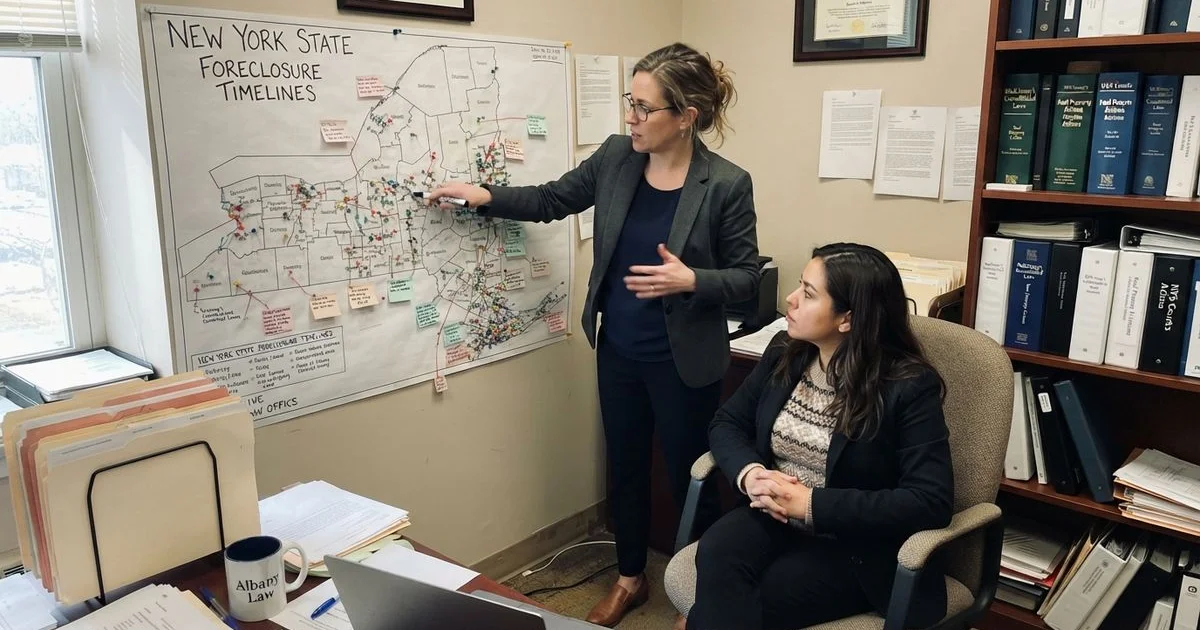
Foreclosure law varies a lot by state, and New York’s rules are more protective of homeowners than many other states in a few specific ways. Knowing the basic framework helps you understand what your notices and court papers actually mean.
New York is a judicial foreclosure state
Unlike states that allow a lender to sell a home out of court under a power-of-sale clause, New York requires every foreclosure to go through the court system. A lender must file a lawsuit, you have the right to respond, and a judge must sign off on a judgment before a sale can happen. This adds time to the process compared to non-judicial states, and it means the court, not just the lender, has a role at multiple points.
The 90-day pre-foreclosure notice
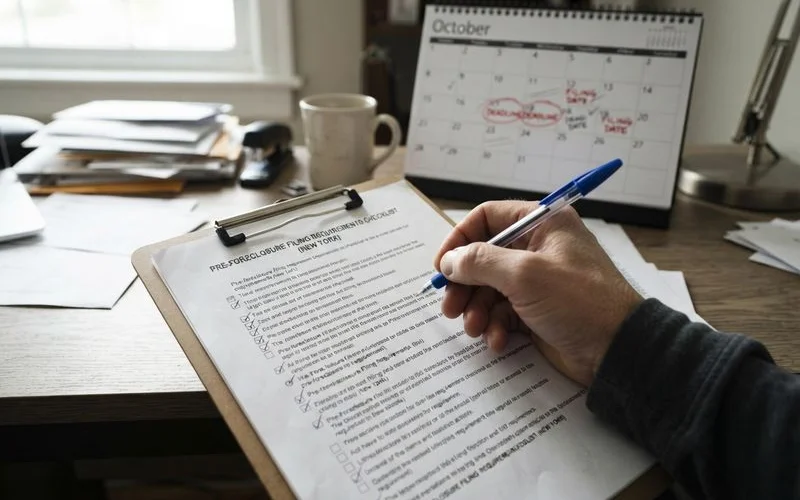
Before suing on most residential mortgages, a lender is required to send a notice at least 90 days in advance. This notice has to explain that you are in default, state the amount needed to cure it, and list HUD-approved housing counseling agencies you can contact for free help. If this notice was not properly sent, it can become a legal issue in the case itself, which is one reason it is worth keeping every piece of mail your servicer sends.
The mandatory settlement conference
For an owner-occupied home with one to four units, New York courts are required to schedule a settlement conference early in the case. This is a structured opportunity for the homeowner and lender’s representative to discuss loss mitigation options, including loan modification, in front of a court referee. It does not guarantee a resolution, but it is a real procedural right, not a favor from the lender.
Key terms you will likely see in your paperwork
| Term | What it means |
|---|---|
| Notice of default | Formal notice from your servicer that you have missed payments |
| RPAPL 1304 notice | The required 90-day pre-foreclosure warning under New York law |
| Summons and complaint | The document that formally starts the court case against you |
| Lis pendens | A public notice recorded against the property once the case is filed |
| Judgment of foreclosure and sale | The court order authorizing a sale, issued if the case is not resolved |
Statute of limitations on foreclosure debt
New York generally applies a six-year statute of limitations to foreclosure actions, meaning a lender must file the lawsuit within that window of the loan going into default or of a prior acceleration of the debt. This area of law has been the subject of significant litigation over the years, since determining exactly when the clock started running can be genuinely complicated, especially if a case was previously filed and discontinued. If your loan has been in default for a long time without a lawsuit being filed, this is worth raising with an attorney specifically.
How other liens affect the process
If there are other liens on the property, a second mortgage, a home equity line, unpaid property taxes, or a contractor’s lien, those claims typically need to be addressed as part of the foreclosure case or the eventual sale. New York procedure generally requires that anyone with a recorded interest in the property be named in the lawsuit so their claim can be resolved. This is one of the reasons foreclosure cases involving multiple liens tend to take longer and cost more to defend or resolve than a straightforward single-lender case.
Why this matters for your next step
Every one of these protections comes with a deadline attached to it, and missing a deadline can mean losing the protection. If you have received any of these notices, it is worth having an attorney confirm they were sent correctly and that your response window is calculated right. None of these protections change what happens to your physical possession of the house while the case is pending; the guide to your right to stay during a New York foreclosure covers that separately. This directory’s scoring method explains how foreclosure defense listings are ranked. Start from the homepage to see the full range of categories, including foreclosure defense litigation, bankruptcy, and loan modification, so you can find the right fit for your situation.
This article explains general New York foreclosure procedure and is not legal advice about your specific case. Laws and court procedures can change, so confirm current requirements with a licensed attorney.
Common questions
- Does New York require a warning before a lender can foreclose?
- Yes. New York law requires most residential lenders to send a written notice at least 90 days before filing a foreclosure lawsuit, informing the borrower of the default and listing housing counseling resources.
- What is a settlement conference and is it required?
- It is a court-scheduled meeting between the lender and homeowner to discuss resolution options such as loan modification. New York requires it for foreclosure cases involving owner-occupied one-to-four family homes.
- Can a lender foreclose in New York without going to court?
- No. New York only allows judicial foreclosure, meaning the lender must file a lawsuit and get a judge's judgment before a property can be sold at auction.
- What happens if I do not respond to a foreclosure lawsuit?
- The court can enter a default judgment, which lets the case move toward a sale without the settlement conference protections a response would have preserved. Responding by the stated deadline keeps more options open.